Handfasting Scottish Style
Handfasting and legal marriage in Scotland - a bit of history
 The
term, handfasting derives from the Old Norse hand-festa,
meaning to strike a bargain by shaking hands. Thus, the
mere act of joining hands in front of witnesses was
deemed to be a marriage by declaration and, until the
law changed in 1939 three types of irregular marriage
existed in Scotland. These were cases where the couple,
in effect, agreed to be married without an official
ceremony.
The
term, handfasting derives from the Old Norse hand-festa,
meaning to strike a bargain by shaking hands. Thus, the
mere act of joining hands in front of witnesses was
deemed to be a marriage by declaration and, until the
law changed in 1939 three types of irregular marriage
existed in Scotland. These were cases where the couple,
in effect, agreed to be married without an official
ceremony.- a mutual agreement in front of a witness
- a promise of marriage followed by sexual relations, and
- marriage by "cohabitation with habit and repute" - if a man and woman behaved and lived as if a married couple
Regardless of the legal situation, from 1753 the attitude of the Kirk (Church of Scotland) to marriages created by future tense consents followed by consummation changed. Though the Kirk recognised such marriages as fact, they regarded them as “sinful” and therefore encouraged such couples to be married again in the church.
It might be worth noting that one of the things that makes some people reluctant to consider handfasting is the widespread, but incorrect, belief that historically a handfasting was a trial marriage. That was never the case, but we can thank a combination of misreporting in the 18th century and romantic fiction (Sir Walter Scott's novel, The Monastery) for spreading this rumour together with the internet and many celebrants for perpetuating it!
Handfasting Scottish style
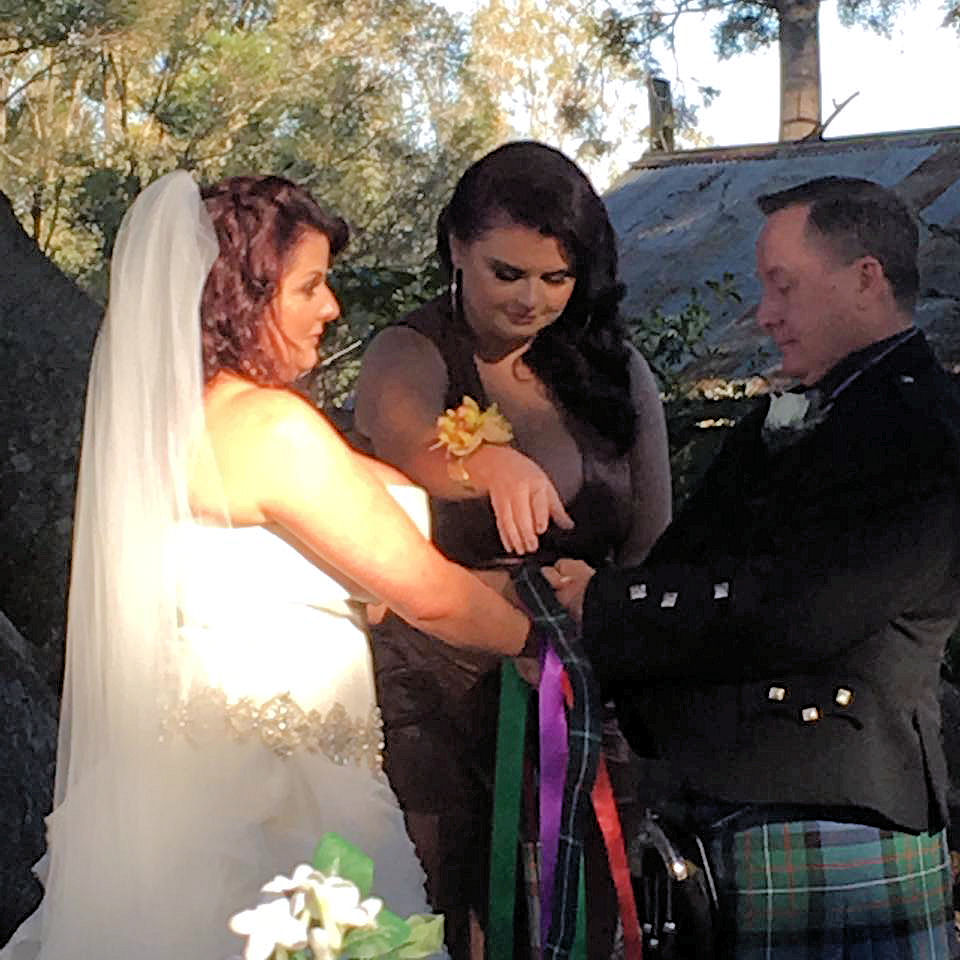 There is no authorised form of the
handfasting ritual, so, together, we will create the
words and the method of tying to reflect your individual
wishes. In common with other elements of traditional
Scottish weddings, the handfasting ritual is a ceremony
of complete equality between the couple.
There is no authorised form of the
handfasting ritual, so, together, we will create the
words and the method of tying to reflect your individual
wishes. In common with other elements of traditional
Scottish weddings, the handfasting ritual is a ceremony
of complete equality between the couple.Simply put, handfasting, Scottish style, involves the couple's hands being bound together by the ban', This can be a length of cloth, in clan tartan, made up of two tartans, representing the respective clans of the marrying couple, or tartan ribbon, other ribbons, and/or cords, either on their own or plaited together.
Incorporating a handfasting in your ceremony can be a
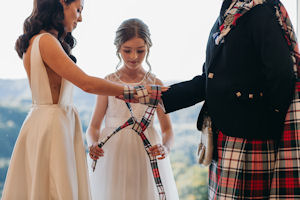 beautiful addition and a graceful way to acknowledge
family ties as well as your personal commitment to one
another, both by the words and by including family
members in the ritual, as did this couple whose daughter
tied the knots
beautiful addition and a graceful way to acknowledge
family ties as well as your personal commitment to one
another, both by the words and by including family
members in the ritual, as did this couple whose daughter
tied the knotsPhotograph courtesy of www.figtreepictures.com
More information on
marrying in the Scottish Tradition